



Everything You Need to Know About Candle Making
From melting your first batch of wax to the finished candle—a practical guide from one maker to another.
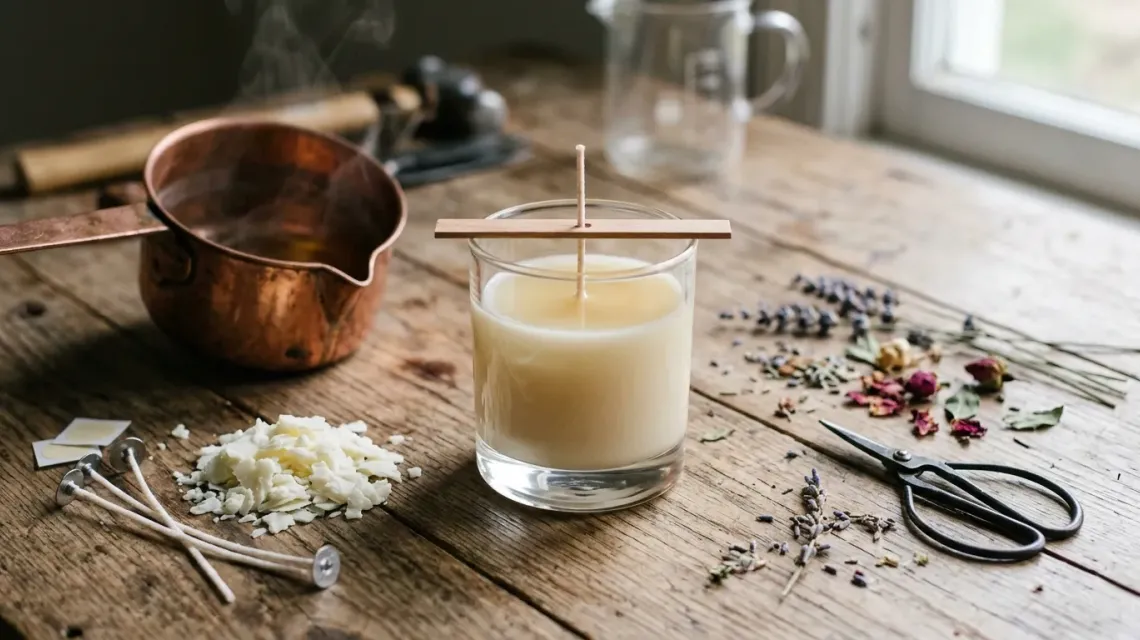
There is something deeply calming about melting wax, centering a wick and waiting for it to set—it is simple chemistry and a little everyday magic at the same time.
Candle making is one of the most accessible crafts you can learn at home. You do not need industrial equipment or years of practice—only curiosity, a few carefully chosen materials and a willingness to experiment.
For many people, the process begins as a relaxing weekend activity and gradually becomes a small creative business. Handmade candles are appreciated products, but whether you intend to sell them or simply enjoy making them, the foundation is the same: understanding the materials you work with.
This guide explains the process step by step, from making a candle from scratch to understanding its three fundamental elements: wax, wick and fragrance.
Wax—the Heart of the Candle
Wax defines a candle’s character: how it looks, how long it burns, how it holds fragrance and what environmental footprint it leaves. Choosing the type of wax is one of the first and most important decisions you will make as a candle maker.
Two widely used options are: soy wax and paraffin wax. Each has its own strengths and limitations.
Quick Comparison
- Plant-based origin
- Slow, even burning when the formula is properly tested
- Plant-based and biodegradable
- Matte appearance that suits container candles
- Performs well with moderate fragrance levels
- Traditional and widely available
- Good fragrance throw while burning
- Smooth surface and glossy appearance
- Suitable for freestanding or pillar candles
- Often lower cost per kilogram
Which One Should You Choose?
If you want to build a handmade brand around a sustainability message and a clean aesthetic, soy wax can be a natural choice. Soy-wax candles in glass jars suit the slow-living aesthetic that many customers appreciate.
If strong fragrance performance is your priority—for example, for pillar candles or larger spaces—paraffin wax or a soy-paraffin blend may be a suitable option.
Practical tip: Start with small quantities of both types and test them under comparable conditions—the same wick, fragrance and container. You will quickly discover which one better suits your workflow and desired result.
The Wick—the Engine of the Candle
Of all the candle-making materials you need, the wick is often the most underestimated and one of the most critical. The wrong wick can turn a beautiful candle into a product that does not perform correctly, regardless of the quality of the wax or fragrance.
The Two Extremes to Avoid
- Wick too small: The candle tunnels—it melts only in the center, leaving thick walls of unmelted wax around the edges. The result is wasted wax and weak fragrance performance.
- Wick too large: The flame becomes too high, produces smoke and soot, and may overheat the container. It can also create a safety risk.
How to Choose the Correct Wick Size
As a starting point, the container diameter helps determine the wick size. Wick and candle-supply manufacturers provide reference charts, but testing remains essential because the wax type and fragrance percentage also affect wick performance.
- Containers up to 5–6 cm in diameter—start with sizes recommended for small containers
- Containers between 6 and 9 cm in diameter—test sizes recommended for medium containers
- Containers over 9 cm in diameter—may require a larger wick or two wicks, depending on the wax and container
A Simple and Effective Testing Protocol
-
1First BurnMonitor the first burn and observe how the melt pool develops. Do not force it to reach the edges during the first session; evaluate its progress gradually and respect the maximum burn time recommended for the container and formula being tested.
-
2Check the FlameA properly performing flame burns steadily without excessive flickering, persistent smoke or visible soot. If the flame is too large or the container becomes excessively hot, the wick may be oversized.
-
3Trim the Wick Before Each BurnTrim the wick to approximately 5–6 mm above the wax unless the wick manufacturer recommends otherwise. An overly long wick is a common cause of a high flame and smoke.
-
4Record EverythingKeep a testing log with the wax type, wick size, fragrance percentage and results. It is one of the best long-term learning tools.
Important: Do not skip testing, even when you are in a hurry. An untested wick in a candle sold to a customer can create both safety concerns and a difficult reputation problem.
Fragrance—Finding the Right Balance
Fragrance is one of the reasons many people choose a handmade candle. It is the emotional element that can create a memory. That is why the way you add fragrance oil to the wax matters just as much as the fragrance product you choose.
Temperature—the Often-Ignored Factor
A common mistake is adding fragrance oil at a temperature that is unsuitable for the wax being used. The incorporation temperature affects the uniformity of the mixture and fragrance performance, so the correct range should be checked in the technical information provided for both the wax and the fragrance oil.
There is no single temperature range that applies to every soy-wax formula. Follow the incorporation temperature specified by the wax manufacturer and fragrance-oil supplier. Mix slowly and evenly according to the product instructions to achieve a uniform dispersion.
Recommended Fragrance-Oil Percentage
- Soy wax: follow the fragrance-load limit in the technical information, as it varies by formula
- Paraffin wax: check the exact wax specification, as fragrance capacity differs between products
- Do not exceed the manufacturer’s recommended percentage—excess fragrance oil may affect the candle’s appearance, stability and burn performance
Curing—Patience Makes the Difference
After pouring, allow the candle to cure for the period recommended by the wax manufacturer before testing its burn and fragrance performance. Depending on the formula, this may range from a few days to one or two weeks.
Testing recommendation: When testing a new formula, record the recommended curing period and evaluate the result only after it has ended. Some soy-based formulas require more time to develop their full fragrance performance.
First Steps: Start Small and Learn a Lot
Candle making combines science and art. It involves temperatures, proportions and diameters, but it also leaves plenty of room for interpretation, personal taste and your own story. There is no universal recipe, and that is exactly what makes it so engaging.
When you are starting out, resist the temptation to buy ten types of wax and twenty fragrances in the first week. Instead:
- Choose one type of wax and learn it well
- Test 2–3 wick sizes for the containers you intend to use
- Work with one fragrance per session and record everything
- Burn every test candle through its full life and analyze its performance
- Accept that your first 10–20 candles are part of the learning process, not failures
Every experienced candle maker has produced a tunneling candle, used an oversized wick or tested a fragrance that did not perform as expected. The difference between a beginner and an experienced maker is not perfection—it is the number of iterations.
Begin. Melt. Pour. Learn.
Find Everything You Need for Your First Project
Explore Solideea’s candle-accessories category for wax, wicks, molds, jars and everything you need to turn an idea into a real candle. Each material is carefully selected for makers like you.
Explore Candle-Making Accessories →
Leave a Comment